 Electric vehicles (EV) are a hot topic right now.
Tesla has announced that its new Model 3 cars will hit the market by the end of July 2017 – the first Tesla car to be delivered to customers on time. The Model 3 is aimed at broadening Tesla’s customer base. With a starting price of US$35,000, it is much more affordable than the more upmarket Model S and Model X. Production will start at 1,500 cars in September and is targeted to reach 20,000 by December this year.
Yesterday, Volvo announced that it would be going all-electric with every car in its range to have an electric train by 2019. It is the first car manufacturer to make this transition. Volvo’s CEO, Håkan Samuelsson, has said that: “This announcement marks the end of the solely combustion engine-powered car.”
Furthermore, many other car manufacturers either have or are working on creating an electric or hybrid model. These days consumers can choose from the original hybrid, the Nissan Prius or upgrade to the Nissan LEAF, the Renault ZOE or the BMW i3, the Volkswagen e-Golf or the Volkswagen e-up. And of course, we mustn’t forget the upscale Tesla Model S and Model X. Jaguar is also currently working on an electric vehicle to be launched in 2018, the I-Pace, with an expected range of 300 miles on one charge.
All this activity has unsurprisingly led Bloomberg New Energy Finance (BNEF) to reassess their EV forecasts from last year. BNEF’s Electric Vehicle Outlook 2017, published yesterday, draws the following key conclusions:
- by 2040, 54% of new car sales and 33% of the global car fleet will be electric;
- falling battery prices are key to the growth of this market and battery electric vehicles will outpace plug-in hybrid vehicles;
- lithium-ion battery demand from EVs will grow from 21GWh in 2016 to 1,300GWh in 2030;
- EV sales to 2025 will remain relatively low, but there will be an inflection point in adoption between 2025 and 2030; and
- electric vehicles will become price competitive on an unsubsidised basis beginning in 2025.
This EV revolution will be great for the environment by removing polluting cars off the roads. And the race is now on between Tesla and Chinese battery companies, such as Contemporary Amperex Technology Ltd (CATL), to produce enough batteries to power this revolution. One GWh could power 40,000 electric cars each travelling 100km. Chinese battery companies are currently targeting the production of 121 GWh of batteries by 2020, far in excess of Tesla’s gigafactory target of 35 GWh when it reaches full capacity next year. However, Tesla does not like to be in second position, so we may seem some developments on this front soon!
 I have always believed that a clean energy revolution can only be achieved with support and buy-in from the big oil and gas companies. It seems that many such companies are now starting to agree.
 On 12 June, London Mayor Sadiq Khan, launched a £1.6m clean technology incubator at London’s Tech Week.
 Big businesses often get lambasted for ignoring their impacts on the environment.
 In my original
  On 9 June, the first
 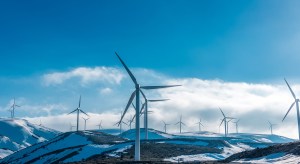 On 7 June 2017, the UK generated over 50% of its electricity from renewable energy for the first time ever. This follows on from the UK going a full 24 hours without any power generated from coal on 21 April 2017. These are landmark moments indeed! However, the UK still has a long way to go in renewables as it is lagging behind most international benchmarks. In 2015, only 8.2% of UK energy was generated from renewable sources. Furthermore, the UK now has plans to scrap its target of reaching 15% renewable energy generation by 2020 as part of Brexit.

 The oceans and seas of the world cover 2/3 of the surface area of our planet. They feed us, absorb carbon dioxide, emit half of the oxygen generated by plants and contain an abundance of natural resources, from hydrocarbons to minerals. However, they are being used and abused.
 Sustain a Future